A well-designed building should do more than respond to a switch. It should respond to the people within it, the conditions around it, and the way it is intended to be used.
KNX is the technology that makes this possible.
Used in residential and commercial buildings around the world, KNX is an internationally recognised standard for building automation. It allows lighting, blinds, heating, cooling, ventilation and other systems to communicate and operate together through a common control infrastructure.
Rather than relying on a collection of independent smart devices, KNX provides a coordinated foundation on which an entire building can be designed to work as one integrated system.
KNX is more than a way to automate individual functions. It is an opportunity to create buildings that are more intuitive to live in, more efficient to operate and better equipped to adapt over time.
KNX is an intelligent building automation system that allows different technologies throughout a home or building to communicate and work together.
KNX establishes a common language that allows compatible devices from different manufacturers to work together within the same automation system. The standard supports applications ranging from residential lighting and climate control to sophisticated commercial building management.
Think of it as the infrastructure connecting the different systems throughout a building.
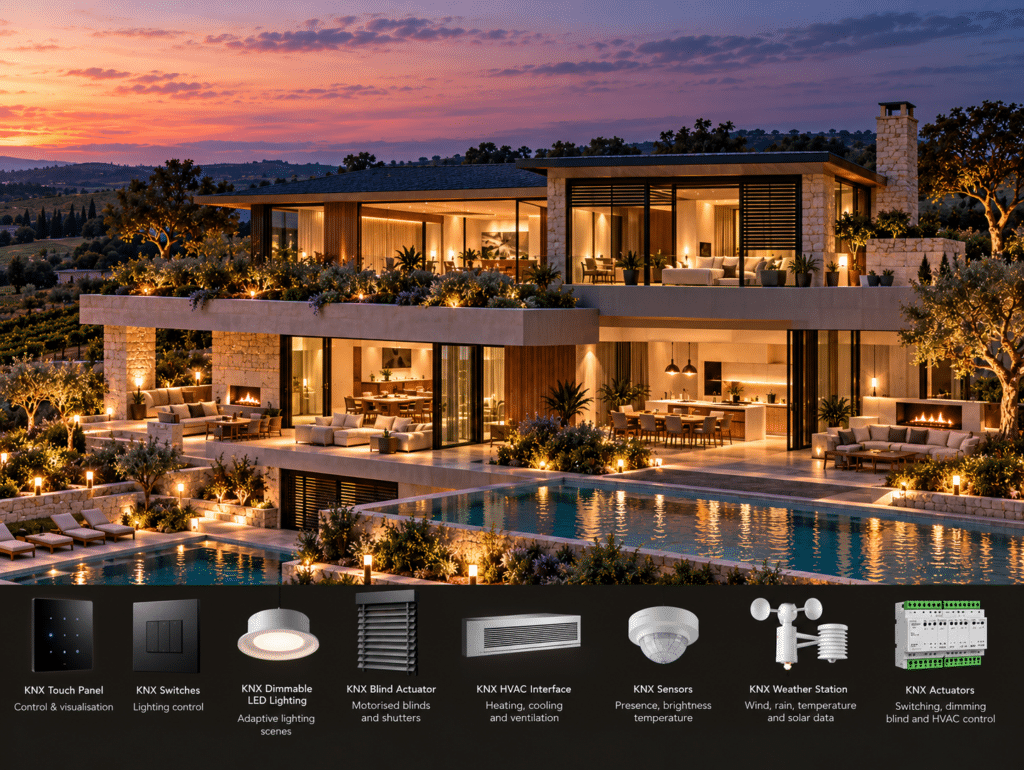
A lighting sensor can communicate with a lighting actuator. A temperature sensor can inform a heating system. A window shading system can respond to changing sunlight, helping manage glare and heat gain. These functions can be designed individually or combined into co-ordinated sequences that suit the building and its occupants.
The result is not simply a building with more technology. It is a building in which the technology has been designed to work together.
Instead of operating lighting, heating, cooling, blinds and other electrical systems independently, KNX connects them through a single, reliable communication network. This allows the building to respond intelligently to its occupants, the time of day and changing environmental conditions.
Imagine arriving home in the evening.
With a single press of a button, KNX can activate a personalised Welcome Home scene.
The entrance lights gently illuminate, the living room lighting adjusts to a warm evening setting, the blinds close for privacy and the climate control begins adjusting to your preferred temperature.
Rather than controlling each system individually, KNX allows them to operate together as one intelligent environment.
These functions can also be automated using sensors, schedules and environmental information, allowing the home to make adjustments without constant interaction.
KNX supports different communication media, allowing the network to be designed around the building and its requirements.
KNX Twisted Pair (TP) is widely used for wired installations. A dedicated bus cable connects KNX devices and carries their communications, while electrical power for the controlled equipment is supplied separately where required.
KNX IP uses Ethernet-based networking to support communication between KNX devices and network infrastructure. It can connect KNX areas or lines through IP routers and provide a path for interfaces, visualisation and integration with other systems.
KNX Radio Frequency (RF) allows compatible devices to communicate wirelessly, which can be useful in suitable applications where installing additional bus cabling is impractical.

These media can be combined where the design calls for it. The choice depends on the building, the equipment being controlled, the desired functionality and the requirements for installation and future expansion.
A well-planned system considers these decisions early, allowing the infrastructure to support the building both now and in the years ahead.
Unlike many conventional smart home systems, KNX uses a decentralised approach to automation.
This means intelligence is distributed across individual KNX devices rather than relying entirely on one central controller. Once programmed, essential functions such as lighting and blind control can continue operating independently of an internet connection or central visualisation system.
KNX is also an internationally recognised, open standard, allowing compatible products from different manufacturers to work together.
This provides greater freedom when selecting products, expanding an installation or upgrading technology in the future.
KNX is more than a way to control electrical systems. It is the foundation of a thoughtfully designed home, where technology operates quietly in the background.
By connecting lighting, climate control, shading and other building functions, KNX creates an environment that adapts to the way you live.
The technology remains behind the scenes. The comfort, convenience and control become part of everyday living.

